Geology Courses
I teach introductory geology courses: independently, and for both the Centre for Open Learning at the University of Edinburgh and the City of Edinburgh Council – Adult Education Programme.
These include classroom and excursion courses, and all are at beginner level – no previous knowledge required! The courses aim to give you a introduction to geology, illustrated by many examples from the wonderful geology of the Edinburgh area and the rest of Scotland.
Taught courses 2026-2027
Centre for Open Learning, University of Edinburgh
- Tuesdays from 29 September 2026 18:30-20:20 Geology of Scotland’s Coast (6 weeks)
- Saturdays from 3 October 2026 10:00-13:00 Tracing Time Through Holyrood Park: Autumn (3 weeks)
- Friday 9 October 2026 10:00-14:30 James Hutton’s Edinburgh (one day)
- Mondays from 18 January 2027 18:30-20:20 Geology of Scotland’s Hills (6 weeks)
- Tuesdays from 19 January 2027 18:30-20:20 Scotland’s Volcanoes (Online) (6 weeks)
- Saturdays from 6 March 2027 10:00-13:00 Tracing Time Through Holyrood Park: Spring (3 weeks)
- Saturday 24 April 2027 10:00-15:30 Exploring Edinburgh’s Landscape (one day)
City of Edinburgh Council Adult Education
- Thursdays from 24 September 2026 10:00-12:00 Walks: Landscape and Geology: Beginner (10 weeks)
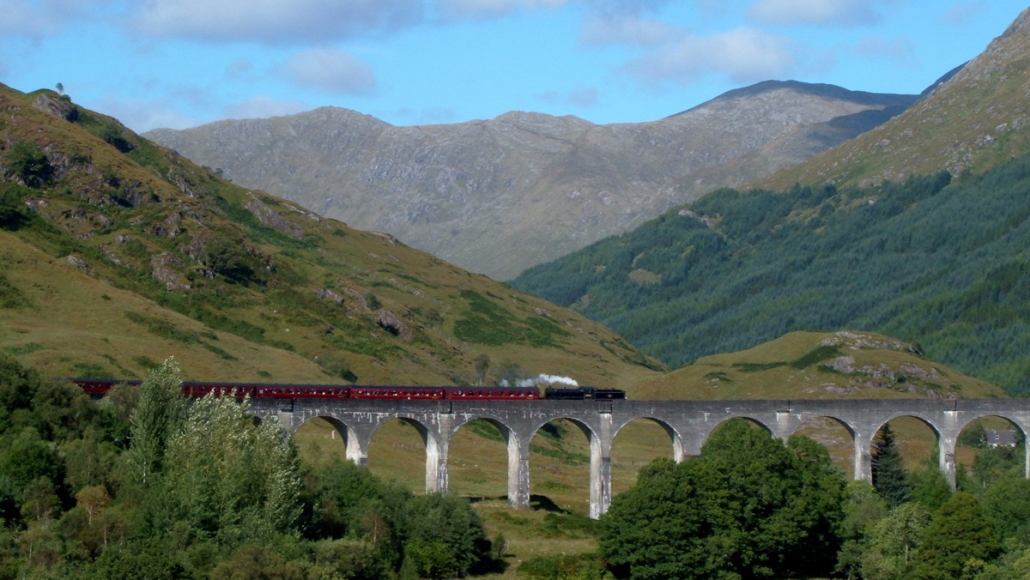
The Glenfinnan Viaduct
Geowalks course: Geology of Scotland for Beginners
This new, independent online course was offered live for the first time in January and February 2026. The sessions are recorded and available to purchase below.
It is aimed at anyone who is interested in Scotland and its landscape, and would like to find out more about the geological underpinnings of this small but interesting country. We explore all aspects of the geology of Scotland, linking the underlying rocks with today’s landscape, and discover intimate connections between rocks, landscape and people.
The course assumes no prior knowledge, and will build an understanding of the basic principles of geology and how these apply to Scotland’s story, with lots of pointers to further information.
Programme
Session 1: Scotland’s Journey We start by building a basic understand how the Earth works, and how the surface of the planet is forever changing due to the Earth’s internal heat and the movement of tectonic plates. We explore how drifting continents over billions of years have led to the creation of Scotland’s rocks: an amazing variety of rock types and ages. Link to Recording.
Session 2: Sedimentary rocks of Scotland One of the major, long-lasting processes on the surface of planet Earth is the erosion of land surfaces and the transport of sediment towards the sea. It goes on today, and it has done for billions of years. This simple process has led to the creation of major new rock volumes in the past, which are a significant feature of Scotland’s land and surrounding seabed today. Link to Recording.
Session 3: Igneous rocks of Scotland Volcanoes were here. Significant episodes of volcanic activity have occurred in Scotland in the past, creating a wide range of igneous rocks in volcanoes and underground accumulation of magma. From Skye, Staffa, Glen Coe, Arran to the craggy hills of central Edinburgh, this volcanic activity is responsible for much of the most iconic of Scotland’s scenery. Link to Recording.
Session 4: Metamorphic rocks of Scotland Moving continental plates collide, and make mountains. Intrinsic to this process is the burial, heating and change to existing rocks to make metamorphic rocks, such as slate, schist and gneiss. These rocks underlie a significant proportion of Scotland’s Highlands and Islands, and are connected to episodes of continental collision in the past, particularly the episode known as the Caledonian Orogeny 400-500 million years ago. Link to Recording.
Session 5: Moulding Scotland’s landscape Scotland’s varied and beautiful landscape is moulded from the variety of rocks that are found here, and their characteristics that have resulted in erosion of tens, often hundreds, of millions of years. Throughout Scotland, there is a strong connection between the shape of the land and the underlying rocks. Link to Recording.
Session 6: Scotland’s Story We trace Scotland’s story, showing how changing global conditions have led to the creation of a palimpsest of different rocks over a long period of time, and how these stories are encoded in the rocks. We draw on the work of Hugh MacDiarmid, Rabbie Burns and other writers to bring together the “loose ends of Scotland and … attempt to express the whole” and consider what’s coming next, before the “rocks melt wi the sun”. Link to Recording.
Edinburgh Castle & Salisbury Crags
Geowalks course: The Geology of Edinburgh
This new, independent course was delivered as a combination of walks and online learning in October and November 2025. We explored the deep basement rocks that peek through in the centre of the Pentland Hills, then moved on to consider the long story of sediment accumulation in this area, combined with two episodes of volcanic activity and magma intrusion that form the bedrock underlying the city. We also considered the long period of erosion, including recent glaciations, that have shaped the landscape of Edinburgh; and how this huge geological story influences today’s city, and has helped developed ideas of how the world works.
“I wanted to thank you for the excellent series on online lectures about the geology of Edinburgh. They were very interesting and informative. You are a skillful educator and it was a real pleasure to follow the course.”
The online sessions are recorded and available to purchase below. Session one is available for free to allow you to get a taster for course content and level.
Programme
Session 1: Introduction to the geology of Edinburgh Link to Recording.
Session 2: Formation of the Old Red Sandstone & the volcanoes of the Pentland Hills Link to Recording.
Session 3: Sedimentary basins in the Carboniferous Link to Recording.
Session 4: Volcanoes and intrusions in the Carboniferous Link to Recording.
Session 5: Erosion and landscape formation Link to Recording.
Courses at the Centre for Open Learning, University of Edinburgh
Geology of the Lothians
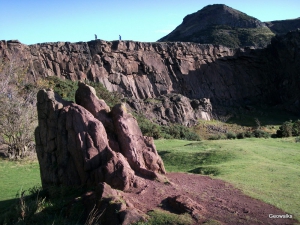 Edinburgh is justly famous for its remarkable scenery: a landscape that results from the interaction of the processes of erosion and glaciation with the solid bedrock formed millions of years ago. Across the Lothian area we find a variety of rock types and ages; a mixture of sedimentary and igneous rocks formed by different processes, mostly in the period from 400 to 300 million years ago. This course examines these rocks, describing how they were formed, the varying conditions that have existed here through geological time, and how the rocks have been modified, moved and eroded.
The course includes an introduction to the geology of the Lothians, and the way that the underlying rocks influence the landscape. We then consider the sedimentary and igneous rocks of the area in more detail, including case studies of the Arthur’s Seat and rocks used by people. The course concludes with an analysis of the effects of glaciation in sculpting the landscape of the Lothians.
Scotland’s Volcanoes
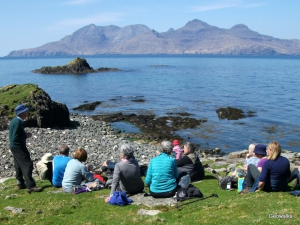
Past volcanic eruptions have had a significant role in shaping Scotland’s landscape, creating for example the rocks of Glencoe and Skye. By exploring modern eruptions around the world we can develop an understanding of the volcanic activity in Scotland’s geological past.
What are volcanoes? Why do they erupt? An introduction to the different kinds of volcanoes and eruptions, and the variety of igneous rocks that are found in volcanic environments. The course considers case studies of active volcanoes and recent eruptions, and looks at how volcanoes work and the materials that they produce: lava flows, pyroclastic flows, ash falls.
The course then moves on to consider the ancient volcanoes and the landscape of Scotland, investigating volcanic episodes in Scotland, and their influence in the local landscape and the shape of country. Scotland’s past volcanic eruptions will be examined thematically, exploring volcanic activity associated with ocean closure and continental collision, and then volcanic activity associated with plate rifting and ocean formation. The type of volcanic activity seen in Scottish volcanoes in the past will be illustrated with examples from modern eruptions from around the world.
Geology of Scotland’s Hills
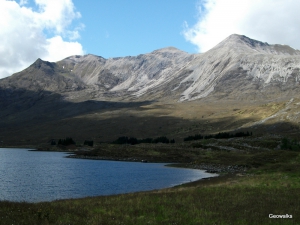 Scotland is renowned for its beautiful and varied mountain scenery. Look beneath the surface and discover a long and complex geological history that has produced a wide range of rock types in difference locations. From the Northwest Highlands to the Southern Uplands, we’ll explore Scotland’s hills and discover the geological stories which make them unique.
The course begins with an overview of the main episodes in Scotland’s geological history, the rocks of Scotland, and why different rocks have formed at different times. Subsequent sessions investigate different areas of Scotland, describing the rocks and landscapes of each area, and considering how the rocks formed, and how they have been modified and eroded. These sessions include consideration of the Scottish Highlands, covering metamorphic rocks, and then the hills made of igneous rock; the hills of the Midland Valley, including the Ochils, Campsies and Pentlands; the Southern Uplands; and the Islands of the west, including Skye, Rum, Mull and Arran.
Geology of Scotland’s Coast
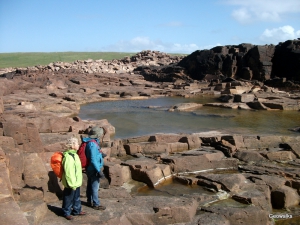 Scotland has an amazing coastline of cliffs and beaches, firths and sea lochs, headlands and islands. This coastline reflects Scotland’s complex geological history, which has resulted in a varied range of rock types formed at different times. The interaction of the sea with these rocks has produced a unique, ever-changing coast. We’ll explore the coast from Shetland to southwest Scotland, including several case studies from all parts of the country, and consider the factors that influence the current shape of the coast and will continue to do so in the future.
The course includes a day excursion exploring the varied coastal landscapes of East Lothian, including visits to St Baldred’s Cradle, Barns Ness and Siccar Point. In exploring a variety of coastal settings we get an opportunity to see some practical examples of the influence that geology has on the shape of the coast and deepen our understanding of coastal processes.
Seven Hills of Edinburgh
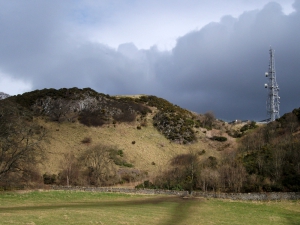
Edinburgh’s landscape is dominated by the Seven Hills, each with a hard core of igneous rock that has been altered and eroded over millions of years by natural forces and more recently by human activity. We will visit each of the hills to explore what they tell us about the past, and how they contribute to today’s city.
Note: the ‘official’ Seven Hills are – Calton Hill, Castle Hill, Corstorphine Hill, Craiglockhart Hill, Braid Hills, Blackford Hill, Arthur’s Seat. I think it is unfair that Salisbury Crags is excluded, just because it lies beside Arthur’s Seat – the Crags are more impressive than many of the other hills. And Craigmillar perhaps deserves a mention (the organisers of the Seven Hills Hogmanay fireworks thought so one year), but it is made of sedimentary rock when all the rest are igneous.