Geology of Edinburgh online course (5 sessions)
Event Date:
11th November 2025
Event Description
Welcome to the Geology of Edinburgh course, which was delivered as a combination of walks and online learning in October and November 2025. The online sessions are recorded and available to purchase. Session one is available for free to allow you to get a taster for course content and level.
There’s nowhere else quite like it. Edinburgh is a city defined by its geology, with a city centre clustered around the spectacular, craggy remains of extinct volcanoes, and plentiful green space provided by the city’s hills, reclaimed bogs and raised beaches. And Edinburgh’s geology has also provided useful resources, including coal, shale oil and building stone.
The course explores the deep basement rocks that peek through in the centre of the Pentland Hills, then move on to consider the long story of sediment accumulation in this area, combined with two episodes of volcanic activity and magma intrusion that form the bedrock underlying the city. We’ll also consider the long period of erosion, including recent glaciations, that have shaped the landscape of Edinburgh; and how this huge geological story influences today’s city and has helped developed ideas of how the world works.
Programme
Online session 1: Introduction to the geology of Edinburgh
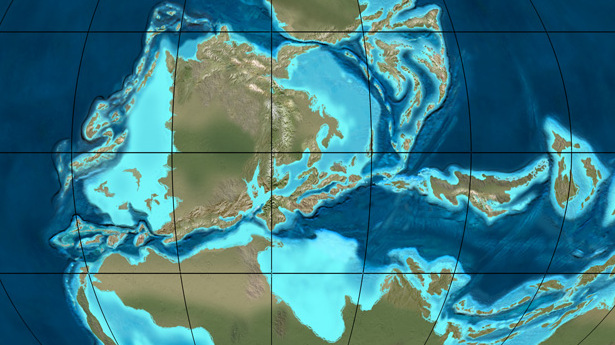
We start the Geology of Edinburgh course with a big picture overview, considering the broad story of colliding and separating continental plates over hundreds of millions of years that have created the conditions for the formation of a wide variety of rocks. And we’ll also consider, through the work of James Hutton and others, how this landscape has been used to help us understand how the Earth works.
Online session 2: Formation of the Old Red Sandstone & the volcanoes of the Pentland Hills
Around 420 million years ago, spectacular volcanic activity rippled across Scotland. In Edinburgh, we see the remains of this activity in the Pentland Hills, Braid Hills and Blackford Hill. This includes lava domes, flows, and the remains of violent volcanic explosions. As the volcanic activity died down, sediment began to accumulate, burying the volcanic remains beneath a thick succession of Old Red Sandstone and other sedimentary rocks.
Online session 3: Sedimentary basins in the Carboniferous
By the start of the Carboniferous period 360 million years ago, this area was dominated by river deltas, swamps and lagoons close to the sea, forming a variety of rock types. In some places, thick accumulations of sedimentary rocks formed.
Online session 4: Volcanoes and intrusions in the Carboniferous
Isolated basalt volcanoes erupted across the centre of Scotland during the Carboniferous period, related to a period of continental stretching. Different parts of these volcanoes are now visible in Edinburgh, including volcanic cones, lava flow successions, and plugs. Later, it was more common for magma to get trapped within underlying rocks, forming sill intrusions that are now seen in isolated rocky ridges such as Salisbury Crags and Corstorphine Hill.
Online session 5: Erosion and landscape formation
Today’s landscape is the result of hundreds of millions of years of landscape evolution, as the processes of erosion have picked out the contrasting hardness of different rock types. Over the last million years or so, ice sheets encroaching from the west have had a big impact in shaping the land, accompanying by rapidly changing sea levels and torrents of meltwater.